How exciting has the Olympic swimming been?
As someone who spent a lot of last year having lessons on how to do front crawl (and a lot of this year trying to remember them) I’ve watched in awe.
Particular heroes amongst the swimming women are, of course,the USA’s Katie Ledecky with her two golds, one silver and one bronze to add to her previous seven Olympic gold medals plus twenty-one World Championship titles. This makes her the most decorated female swimmer ever.
Rebecca Adlington who has done such a great job commentating on the swimming and giving viewers an insight into the struggles and challenges the competitors must be experiencing, is herself Britain’s most successful female swimmer of all time with 17 major championship medals to her name..
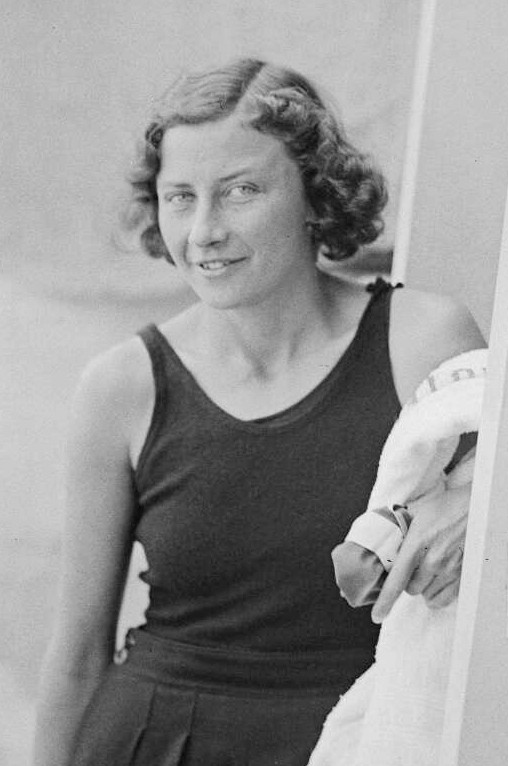
A few years ago, however, it was a Sussex woman who had this acclaim. Joyce Cooper (1909 – 2002) remains one of the most decorated female swimmers this country has produced.
Born in Sri Lanka, Joyce settled in Bognor, West Sussex, with her family as a young girl. She carried on her habit of swimming in the Indian Ocean by taking regular dips in the Channel off Bognor. Not quite the same, but that’s dedication for you. However, it was only in 1925 when, staying in Eastbourne and seeing the strange sight of a woman doing the front crawl in a local pool that she thought ‘perhaps I’ll do that. This was a new stroke.’ and started to take up the sport seriously.
Just two years later Joyce was already of medal winning standard. At the 1927 European Championships in Bologna, her first major international event, she came close to winning gold when she tied with another swimmer in the 100m freestyle race. In the days before photo finishes and video re-play, the only way to establish a winner during an apparent draw was to rerun the race. As Joyce was unable to take part in the re-run due to a health issue, she was awarded the silver. She did take home gold from the competition, however, as part of the 4 x100m freestyle team.
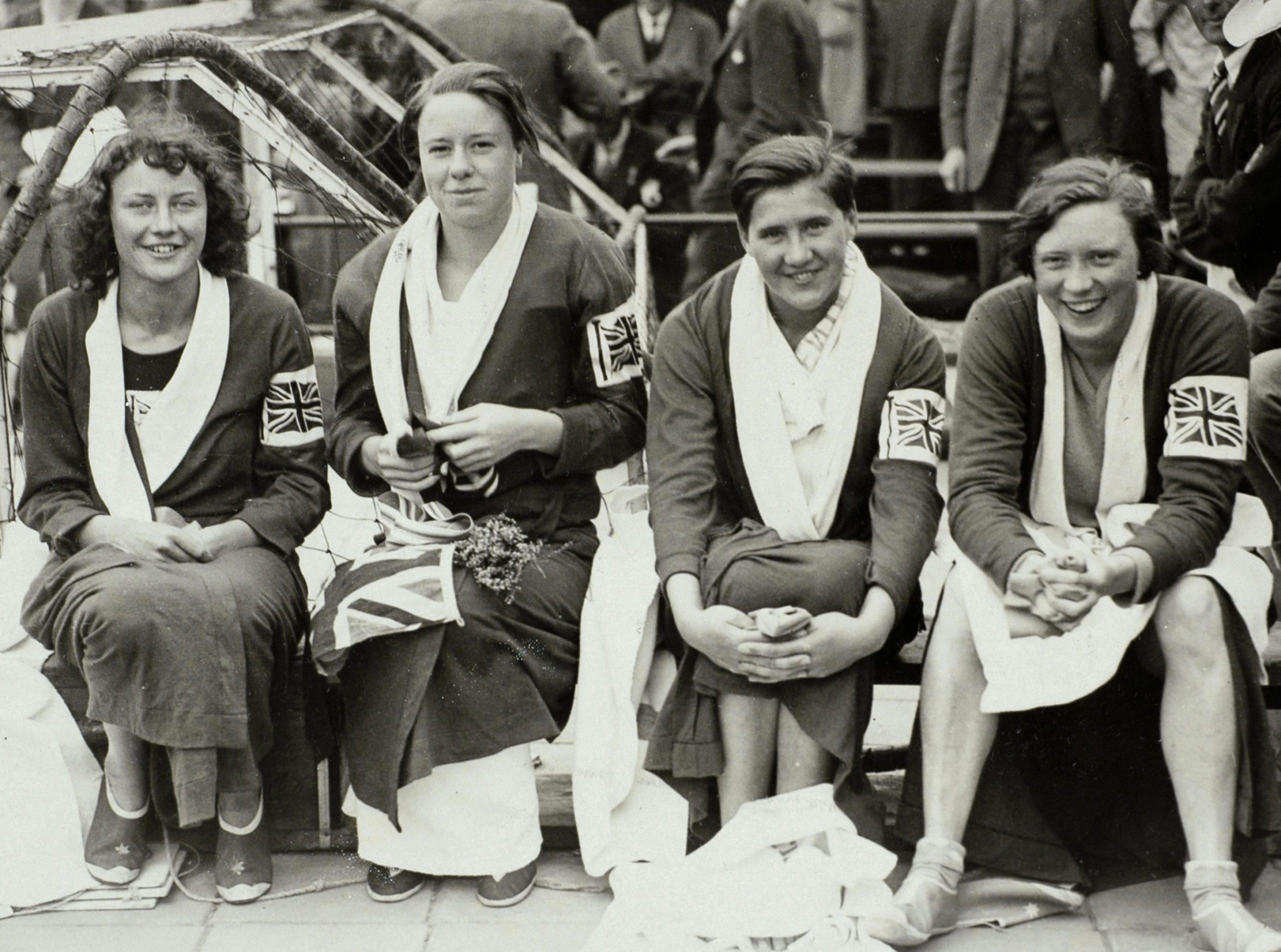
At the 1928 Amsterdam Olympics, the following year (pictured above, L- R Joyce, Ellen King, Cissie Stewart, fellow Sussex woman Iris Vera Tanner from Eastbourne), hopes were high for the British team. Numbers of female competitors had doubled since the last Olympics. For the first time, the swimmers wouldn’t be hampered by ungainly and heavy, knee-length, woollen swimming costumes – which must have felt like swimming in pyjamas -, although long robes on the journey to and from the pool were still insisted upon. Joyce didn’t disappoint and won two bronze medals and a silver for Great Britain.
In a 2011 programme with the BBC World Service, ‘Lady Swimmers of the 1920s’, you can hear Joyce talk to historian Anita Tedder (the interview dates from 15 years earlier) briefly about her career and her experience of the Amsterdam Olympics. Two other women from the British team were also interviewed, Jean McDowell who had been spotted swimming in a North Berwick swimming pool by a coach who told her parents he could make a world champion out of her, and fellow Scot, Sarah ‘Cissie’ Stewart (1911 – 2008) from Dundee. Cissie came from a sporting family. Her father was a footballer and her sister was another swimmer. It’s a very short but interesting listen and gives insight into the difficulties women faced if they wanted to take swimming seriously, such as segregated swimming sessions in pools. How hard it must have been fitting your work and care obligations around the paltry ‘Ladies’ Times’ in the local pool. The interviews also give us a sense of the glamour the media invested in the swimming team. The interview can be heard here:
https://www.bbc.co.uk/programmes/p047sw89
It was at the inaugural British Empire Games in 1930 in Canada, however, where Joyce, representing England, really got into her stride. In Hamilton she won an incredible three gold medals, coming top in three of the four individual women’s titles, topping this with a fourth gold as part of the 4 ×100 yard relay team. At the European Championships in Paris the following year Joyce went on to add three silvers and a bronze to her tally, and in the Los Angeles Olympics of 1932 she won a bronze medal and broke the world record in the heats for the 100m backstroke.
Joyce was a versatile swimmer who was as much at home swimming back stroke as front crawl and equally comfortable swimming long distances, winning many long distance swimming championships at the same time as her international successes. A woman of many talents, she also worked as a tailor and taught ballroom dancing. In 1934 she married another Olympian, rower John Badcock. Their eldest son, Felix Badcock, also became a medal winning rower.
Although not a household name today, Joyce’s achievements are particularly impressive when you consider that in her youth swimming wasn’t as accessible for women as it is today. Not only was swimwear generally designed for modesty not speed, but most pools only offered segregated bathing times with women having to wait until the appointed ‘ladies day’ to be able to practise.
A worthy inductee in the International Swimming Hall of Fame in 1996, the incredible Joyce Cooper died in Chichester in 2002.

(Part of this post was originally published as a Royal Pavilion & Museums Trust blogpost in response to the ‘First Women’ exhibition in Brighton Museum in 2020. This exhibition comprised a collection of 100 portraits by photographer Anita Corbin of women who were first in their field of achievement. To accompany the exhibition 100 blog posts looking at Sussex women from history were produced.
Link to original post: https://brightonmuseums.org.uk/discovery/history-stories/happy-birthday-joyce-cooper-champion-swimmer/.
More blog posts as part of this series here: https://brightonmuseums.org.uk/about-us/culture-change/100-pioneering-women-of-sussex/
The 100 Women exhibition is now online here: https://firstwomen.brightonmuseums.org/
 historywomenbrighton